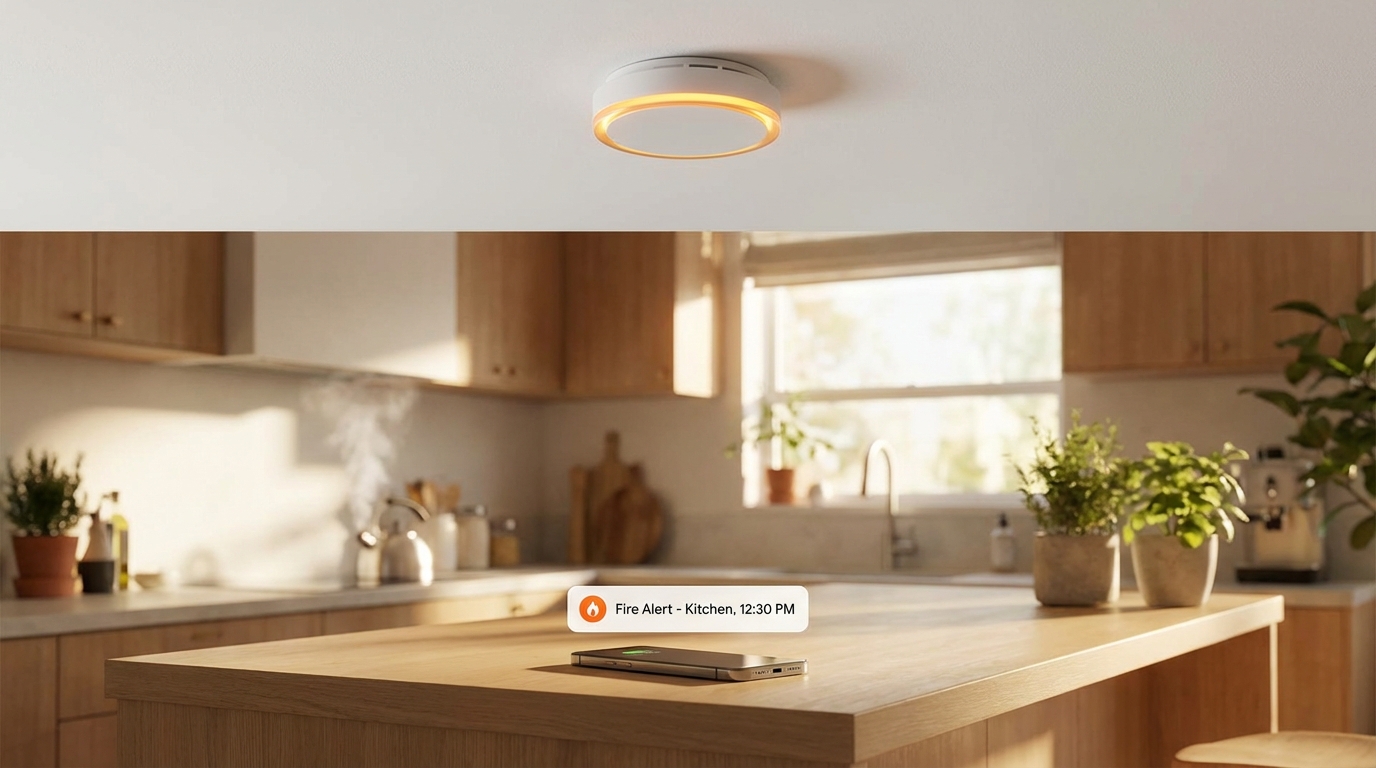
Quick Picks
Short on time? Here are our top recommendations:
- First Alert SC5 (~$100) — Best overall, Nest Protect replacement with Precision Detection and Google Home integration
- Owl Wired (~$169) — Best HomeKit compatible smoke detector with 6-in-1 sensors
- Kidde Smart Smoke & CO (~$45) — Best for Ring users with app-enabled notifications
- Ring Alarm Smoke & CO Listener (~$35) — Best for renters, works with your existing detectors
Traditional smoke detectors do one thing: they beep when they detect smoke. But what happens when you’re not home, or the alarm goes off while you’re asleep upstairs? Smart smoke detectors send instant alerts to your phone, integrate with your smart home ecosystem, and can even distinguish between different types of threats.
In 2026, the smart smoke detector market has matured significantly. Whether you use Apple HomeKit, Google Home, Amazon Alexa, or the newer Matter standard, there’s a smart smoke detector that fits your setup. This guide breaks down the best options available — including the best HomeKit compatible smoke detectors — helping you choose the right one based on your budget, ecosystem, and safety needs.
Our Top Picks Reviewed
First Alert SC5 — Best Overall
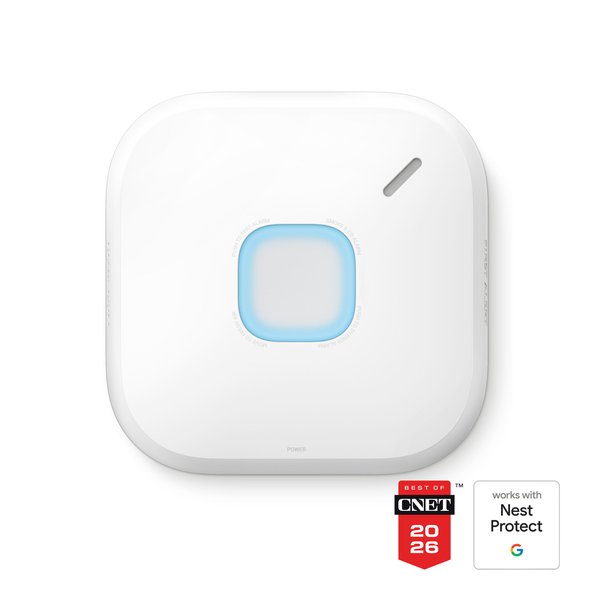
The First Alert SC5 is the true successor to the discontinued Nest Protect — and one of the best Nest Protect alternatives in 2026. It earns our top spot. It uses Precision Detection advanced sensing technology that meets updated industry standards while dramatically reducing cooking nuisance alarms — the #1 complaint with traditional detectors.
Like the Nest Protect before it, the SC5 delivers voice alerts with Heads-Up warnings that tell you the type and location of danger before the full alarm sounds. “Heads up, there’s smoke in the kitchen” gives you time to address false alarms before waking the entire household.
The SC5 works seamlessly with the Google Home app and pairs with other Nest Protect devices you may already own. When multiple units are installed, all alarms sound throughout the house when one detects danger.
Key Features:
- Precision Detection reduces false alarms from cooking
- Voice alerts specify danger type and location
- Smoke and carbon monoxide detection
- Works with Google Home app alongside Nest Protect devices
- Mobile alerts via First Alert app
- 10-year sensor life
Pros:
- Excellent false alarm prevention with updated sensing technology
- Clear voice alerts with location-specific information
- Drop-in replacement for Nest Protect systems
- Reliable brand with 60+ years in fire safety
Cons:
- No Apple HomeKit support
- Google Home ecosystem only (no native Alexa support)
- Newer product, less long-term user feedback
Owl Wired — Best HomeKit Compatible Smoke Detector
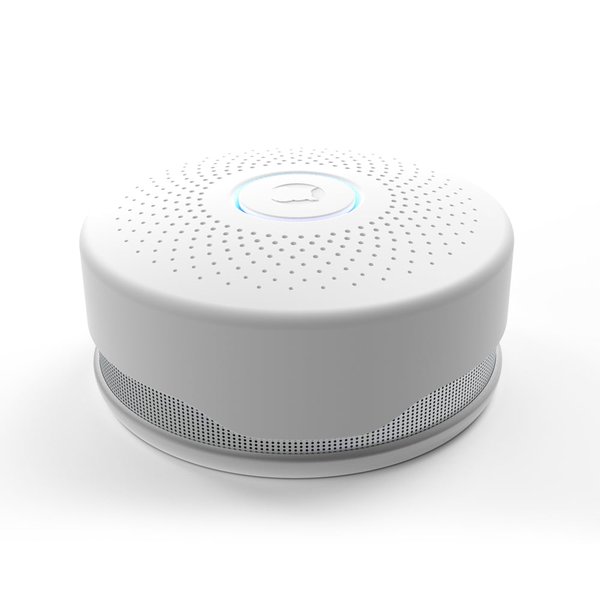
If you’re looking for the best HomeKit compatible smoke detector in 2026, the Owl Wired is it. This is one of the only smart smoke detectors that natively supports Apple HomeKit, Google Home, Amazon Alexa, and IFTTT — making it the most cross-platform option available.
But the Owl Wired isn’t just about ecosystem compatibility. It’s a 6-in-1 sensor that monitors smoke, carbon monoxide, temperature, humidity, sound levels, and motion. That means it doubles as an environmental monitor and basic security sensor. All of this data feeds into the Apple Home app, where you can build automations around temperature changes, motion detection, or smoke alerts.
The sleek circular design comes in white or black and mounts flush to the ceiling. It’s hardwired with battery backup, so you’ll never worry about dead batteries during a power outage.
Key Features:
- Native Apple HomeKit, Google Home, Alexa, and IFTTT support
- 6-in-1 sensor: smoke, CO, temperature, humidity, sound, motion
- Hardwired with battery backup
- Environmental monitoring in Apple Home app
- Sleek design in white or black
Pros:
- The best HomeKit smoke detector available in 2026
- Works across all major ecosystems simultaneously
- Multi-sensor provides extra value beyond fire safety
- Strong Home app integration for automations
Cons:
- Higher price point ($169)
- Hardwired installation required
- Newer brand compared to established fire safety companies
- Requires 2.4GHz Wi-Fi
Kidde Smart Smoke & CO Detector — Best for Ring Users
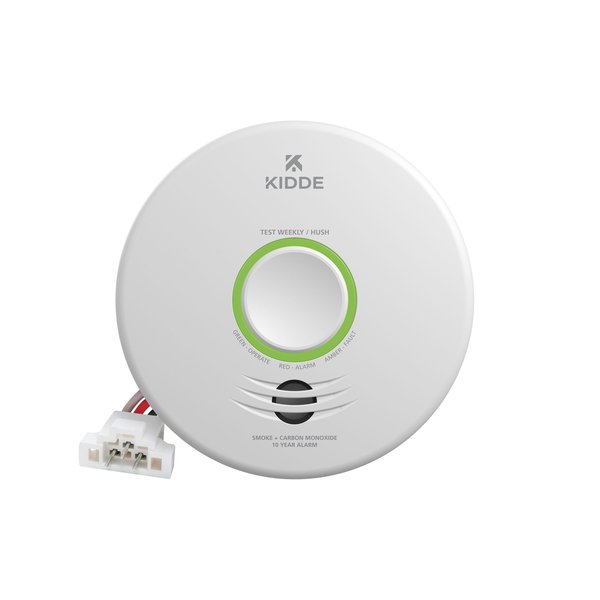
If you already use Ring for home security, the Kidde smart detector is a natural fit. It’s Ring app enabled, meaning smoke and CO alerts show up right alongside your Ring camera notifications, doorbell alerts, and alarm system — one app for all your home safety.
Kidde has been making fire safety equipment for over 100 years, and that reliability shows. The detector uses photoelectric sensing for smoke and electrochemical sensing for CO, covering both fast-flaming and slow-smoldering fire types.
Installation is hardwired with AA battery backup. The smart connectivity is designed so that adding one Kidde smart alarm to an existing hardwired Kidde system gives your whole setup smart notifications — you don’t need to replace every detector.
Key Features:
- Ring app enabled for real-time notifications
- Smoke and carbon monoxide detection
- Hardwired with AA battery backup
- Interconnects with existing Kidde hardwired alarms
- Works with Alexa
Pros:
- Seamless Ring ecosystem integration
- Trusted 100-year fire safety brand
- One smart unit can make existing Kidde system smart
- Affordable for what you get
Cons:
- Hardwired only — not ideal for renters
- No HomeKit or Google Home support
- Replaceable AA batteries require maintenance
- Ring ecosystem lock-in
Ring Alarm Smoke & CO Listener — Best for Renters
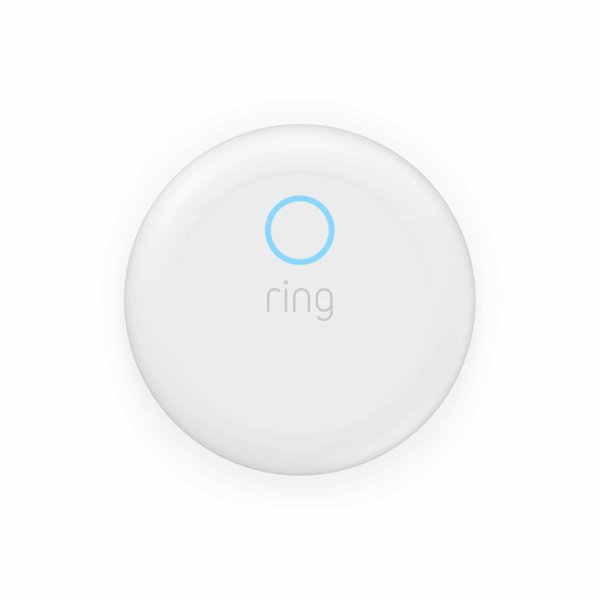
The Ring Smoke & CO Listener takes a completely different approach: instead of replacing your smoke detectors, it listens for your existing alarms and sends alerts to your phone through the Ring app. This makes it perfect for renters who can’t swap out their landlord’s detectors, or homeowners who want smart alerts without replacing working equipment.
The listener uses audio recognition to detect the standard T-3 alarm pattern used by most smoke and CO alarms. Mount it near your existing detectors (no wiring needed — it’s battery powered with ~3 year battery life), connect to your Ring Alarm base station, and you’re set.
Key Features:
- Works with existing smoke and CO detectors
- Audio recognition for T-3 alarm patterns
- Ring app notifications
- Battery powered (~3 year life)
- No tools or wiring needed for installation
Pros:
- Doesn’t replace existing detectors — just adds smart alerts
- Perfect for renters
- Extremely affordable (~$35)
- Easy installation with adhesive mount
- Integrates with full Ring security system
Cons:
- Requires Ring Alarm base station (sold separately)
- Doesn’t detect smoke itself — only listens for alarm sounds
- No location-specific alerts
- Can’t silence false alarms remotely
- Ring Protect subscription needed for notifications
Comparison Table
| Feature | First Alert SC5 | Owl Wired | Kidde Smart | Ring Listener |
|---|---|---|---|---|
| Price | ~$100 | ~$169 | ~$45 | ~$35 |
| Detection | Smoke + CO | Smoke + CO + 4 more | Smoke + CO | Listens for alarms |
| Apple HomeKit | No | Yes | No | No |
| Google Home | Yes | Yes | No | No |
| Amazon Alexa | No | Yes | Yes | Yes (Ring) |
| Matter | No | No | No | No |
| Voice Alerts | Yes (location) | Yes | No | No |
| Power | Battery | Hardwired + backup | Hardwired + AA | Battery (~3yr) |
| Self-Testing | Yes | Yes | No | N/A |
| Best For | Google Home users | HomeKit users | Ring users | Renters |
HomeKit Compatible Smoke Detectors: What You Need to Know
If you’re an Apple user looking for the best HomeKit compatible smoke detectors 2026 has to offer, your options are limited but solid. Apple’s strict certification requirements mean fewer manufacturers support HomeKit, but the ones that do offer deep integration with the Home app.
Why HomeKit Matters for Smoke Detectors
HomeKit integration gives you several advantages over app-only smart detectors:
- Home app alerts appear on all your Apple devices — iPhone, iPad, Apple Watch, Mac
- Siri voice commands let you check detector status (“Hey Siri, is there smoke detected?”)
- HomeKit automations can trigger lights, unlock doors, or shut off HVAC when smoke is detected
- End-to-end encryption means your safety data stays private — Apple’s security architecture is the strongest in the smart home space
- No account required — HomeKit works locally, so your detectors function even if the manufacturer’s servers go down
Our HomeKit Pick: Owl Wired
The Owl Wired is our top recommendation for HomeKit users. Its 6-in-1 sensor array feeds temperature, humidity, motion, and smoke/CO data directly into the Apple Home app, making it far more useful than a simple smoke detector. You can create automations like “if temperature exceeds 100°F, turn on all lights and unlock the front door” — powerful safety automations that go beyond basic notifications.
The Owl Wired also supports Google Home and Alexa simultaneously, so if you have a mixed-ecosystem household, one detector covers everyone.
HomeKit Alternatives
If you want HomeKit smoke detection but don’t want to buy a dedicated smart detector, consider pairing a standard smoke detector with a HomeBridge or Home Assistant setup. These platforms can bridge non-HomeKit detectors into the Home app, though this requires more technical setup. Check out our guide to Home Assistant vs SmartThings for more on hub-based approaches.
Buying Guide: How to Choose the Right Smart Smoke Detector
Sensor Technology
Smart smoke detectors use different sensor types:
- Photoelectric sensors detect slow-smoldering fires (like a cigarette igniting a couch). They’re less prone to cooking false alarms.
- Ionization sensors respond faster to fast-flaming fires (like a grease fire). They’re more prone to nuisance alarms.
- Dual-sensor / split-spectrum detectors combine both methods for comprehensive coverage. The First Alert SC5’s Precision Detection falls in this category.
For the best protection, fire safety experts recommend dual-sensor detectors or a mix of both types throughout your home.
Smart Home Ecosystem Compatibility
This is the most important factor after safety. Match your detector to your ecosystem:
- Google Home users / Nest Protect alternatives → First Alert SC5 (deepest integration, works alongside Nest Protect)
- Apple HomeKit users → Owl Wired (the best HomeKit smoke detector available)
- Alexa / Ring users → Kidde Smart or Ring Listener
- Mixed ecosystem → Owl Wired (supports HomeKit + Google + Alexa)
- Renters / no ecosystem → Ring Listener (pairs with existing dumb alarms)
Carbon Monoxide Detection
Carbon monoxide is an invisible, odorless killer. Many smart smoke detectors now include CO detection, eliminating the need for separate devices. All four of our picks either detect CO directly or (in the Ring Listener’s case) listen for your existing CO alarm.
If you’re buying new, get a combo smoke/CO detector. It saves money, reduces ceiling clutter, and ensures comprehensive coverage.
Battery vs. Hardwired
Battery-powered detectors are easier to install — mount and connect to Wi-Fi. Perfect for renters or anyone uncomfortable with electrical work. Modern sealed batteries last 7-10 years.
Hardwired models connect to your home’s electrical system with battery backup. More reliable during extended outages and often required by building codes in newer construction. If you’re replacing existing hardwired detectors, stick with hardwired smart models.
How Many Do You Need?
Building codes typically require smoke detectors:
- In every bedroom
- Outside each sleeping area
- On every level of the home (including basement)
- In the kitchen (at least 10 feet from cooking appliances)
For a typical 3-bedroom home, plan on 5-7 detectors. At budget prices, that’s $200-$280. Mid-range runs $350-$500. You don’t need premium models in every room — put the best detectors in high-risk areas (kitchen, primary bedroom) and budget models elsewhere.
Installation Tips
Placement for Minimum False Alarms
The #1 reason people disable smart smoke detectors is cooking false alarms. Proper placement prevents this:
- Install at least 10 feet from cooking appliances
- Avoid placing directly above stoves or toasters
- Keep detectors outside bathroom doorways, not inside (steam triggers sensors)
- Mount on the ceiling or high on walls (smoke rises)
- Position at least 4 inches from corners where air doesn’t circulate well
Wi-Fi Considerations
Smart detectors need reliable Wi-Fi to send alerts. Smoke detectors are often installed in locations with weak signal (hallways, stairwells). Before installing:
- Test Wi-Fi signal strength at the mounting location
- Most smart detectors require 2.4GHz Wi-Fi (not 5GHz)
- Consider a Wi-Fi mesh system if you have dead spots
- Detectors still alarm locally without Wi-Fi — you just won’t get phone alerts
Maintenance and Longevity
Testing
Even self-testing detectors should be manually tested occasionally. Fire safety experts recommend:
- Monthly: press the test button or use the app’s test feature
- Twice yearly: test with real smoke (canned smoke test spray, available at hardware stores)
- Annually: vacuum dust from detector vents
Replacement Schedule
All smoke detector sensors degrade over time. Replace your detectors:
- Every 7-10 years regardless of whether they still seem to work
- Immediately when the detector signals end-of-life
- When moving into a new home if you don’t know the age of existing detectors
Smart detectors track their own sensor age and alert you when replacement is due — a genuine advantage over traditional detectors.
Frequently Asked Questions
Do smart smoke detectors work without Wi-Fi?
Yes. Every smart smoke detector functions as a regular alarm without Wi-Fi — the siren still sounds when smoke is detected. You just won’t get phone notifications or smart home automations. The detector stores events locally and syncs when connectivity returns.
What is the best HomeKit compatible smoke detector?
The Owl Wired is the best HomeKit compatible smoke detector in 2026. It’s one of the few detectors with native Apple HomeKit support, plus it works with Google Home and Alexa. It monitors smoke, CO, temperature, humidity, motion, and sound — all visible in the Apple Home app.
Can I mix different brands of smart smoke detectors?
You can install different brands, but they typically won’t interconnect. When interconnected detectors sense danger, all alarms sound throughout the house. Mixing brands means each operates independently. For whole-home interconnection, stick with a single brand.
Are smart smoke detectors worth the extra cost?
For most homeowners, yes — especially if you spend time away from home. The ability to receive alerts when you’re not there, silence false alarms remotely, and integrate with other smart devices adds real safety value. That said, any working smoke detector is infinitely better than none.
Do smart smoke detectors call the fire department automatically?
Most smart smoke detectors only send notifications to your phone. Some integrate with professional monitoring services (like Ring Protect Pro) that can dispatch fire departments, but this requires a monthly subscription. Check specific product features if automatic emergency dispatch is important to you.
How long do smart smoke detector batteries last?
It depends on the model. Sealed lithium batteries typically last 7-10 years (the life of the detector). Replaceable AA batteries need changing every 1-2 years. Smart detectors send low-battery warnings to your phone well before they start chirping, which is a nice upgrade over traditional detectors.
Related Articles You Might Find Useful
- DIY Smart Home Security System Guide — Build a complete security setup including smoke detection
- Smart Home for Beginners — New to smart home? Start here
- Home Assistant vs SmartThings — Compare smart home hubs for centralized control
- Best Smart Home Setup Under $500 — Budget-friendly smart home including safety devices
- Best Video Doorbell Without Subscription — More ways to protect your home without monthly fees