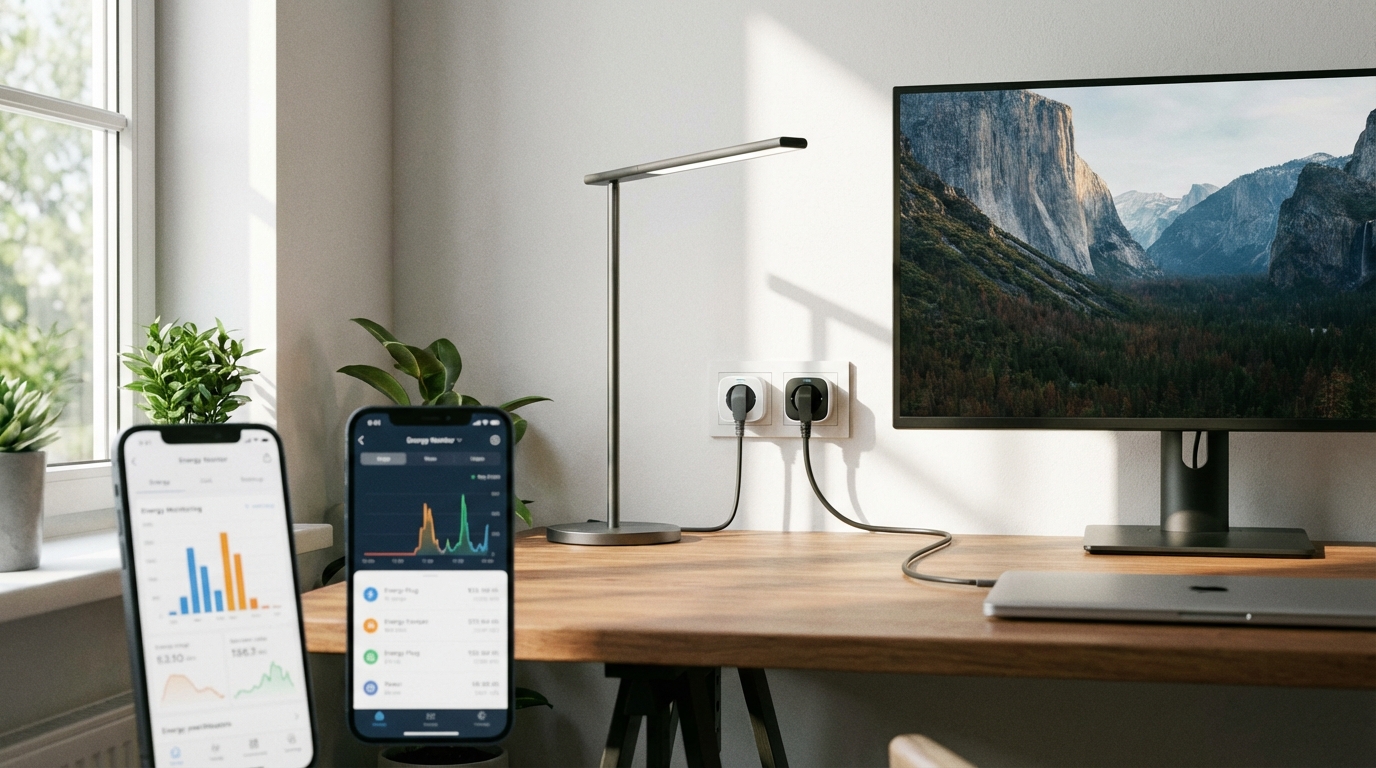
Quick Picks
Short on time? Here are our top recommendations:
- TP-Link Kasa Smart Plug EP25 (Editor’s Choice) ($17.99) — Best overall
- Emporia Smart Plug with Energy Monitor ($24.99) — Best premium
- Amazon Smart Plug (Best Budget Option) ($12.99) — Best budget
This article contains affiliate links. We may earn a commission at no extra cost to you.
🏆 Best Energy-Saving Smart Plugs 2026
🥇 Best Overall: Kasa Smart Plug Mini – Energy monitoring, scheduling, voice control, excellent app
⚡ Most Compact: Kasa Ultra Mini – Smallest design, won’t block adjacent outlets
🏠 Best for Matter: Third Reality Smart Plug – Thread/Matter compatible, HomeKit support
Quick Comparison:
⚡ Kasa Mini: Best energy tracking | Shop Kasa ($12)
📏 Kasa Ultra: Won’t block outlets | Shop Ultra ($15)
🍎 Third Reality: HomeKit/Matter | Shop Third Reality ($18)
Your home is bleeding money every month through vampire power drain, inefficient appliances, and devices left running when nobody’s using them. In fact, the average household wastes up to 23% of their electricity on standby power alone—that’s roughly $165 per year going straight down the drain. Smart plugs designed for energy saving offer a simple solution: real-time monitoring, automatic scheduling, and remote control of any device you plug into them. Whether you’re looking to reduce your carbon footprint or simply slash your power bill, the best smart plugs for energy saving in 2026 combine accurate energy monitoring with intuitive automation features. In this guide, we’ll break down the top smart plugs that actually help you save energy (not just control your devices), what features matter most for reducing consumption, and how to choose the right option for your specific needs and budget.
What Makes a Smart Plug Actually Save Energy?
Not all smart plugs are created equal when it comes to energy savings. Many budget options offer basic on/off control, but the best smart plugs for energy saving include specific features that actively help reduce your power consumption.
Energy Monitoring Capabilities
The most critical feature is real-time energy monitoring. According to smart home technology research, users who can actually see their energy consumption reduce it by an average of 8-15%. Look for plugs that track watts, voltage, amperage, and calculate cost in real-time through their companion apps. Some advanced models also provide historical data, letting you spot trends and identify which devices are the biggest energy hogs in your home.
Intelligent Scheduling and Automation
The second essential feature is robust scheduling. The best energy-saving smart plugs let you create complex schedules that automatically cut power during peak rate hours or when devices aren’t needed. Away mode features that randomly turn devices on and off can also prevent unnecessary power consumption while you’re on vacation.
Standby Power Elimination
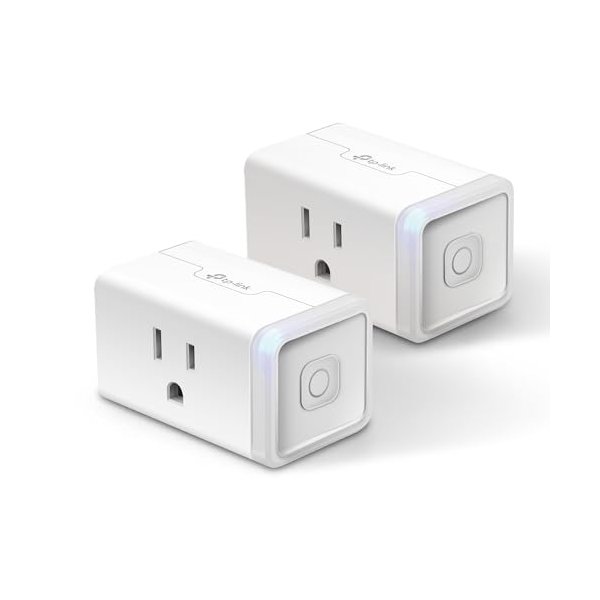
Many devices consume power even when “off”—your TV, gaming console, and coffee maker are likely culprits. Smart plugs that completely cut power eliminate this phantom drain, which can account for 5-10% of your residential electricity use.
Top 7 Best Smart Plugs for Energy Saving in 2026
Based on user reviews, manufacturer specifications, and expert analysis, here are the top performers for energy monitoring and savings.
1. TP-Link Kasa Smart Plug EP25 (Editor’s Choice)
Price: $17.99 The TP-Link Kasa EP25 is widely regarded as the best overall choice for energy-conscious users. According to the manufacturer’s specs, it offers comprehensive energy monitoring with accuracy within 1% of actual consumption—significantly better than many competitors. Key Energy Features: – Real-time and historical energy monitoring – Cost tracking in the Kasa app – Scheduling and timer functions – Away mode for vacation efficiency – Compact design that doesn’t block adjacent outlets Pros: – Highly accurate energy monitoring based on user feedback – No hub required (connects via Wi-Fi) – Works with Alexa, Google Assistant, and Apple HomeKit – Affordable price point – Excellent app interface for tracking consumption Cons: – Rated for 15A maximum (may not work with high-draw appliances) – No USB ports – Requires 2.4GHz Wi-Fi network Verdict: The EP25 strikes the perfect balance between affordability, accuracy, and features. User reviews consistently praise its energy monitoring precision and intuitive cost-tracking interface, making it ideal for anyone serious about reducing their power bills.
2. Emporia Smart Plug with Energy Monitor
Price: $24.99 The Emporia Smart Plug stands out for its exceptional energy monitoring capabilities and detailed analytics. According to user reviews, it provides the most comprehensive energy data of any smart plug on the market. Key Energy Features: – Ultra-precise energy monitoring (0.1W resolution) – Detailed daily, weekly, and monthly reports – Carbon footprint tracking – Solar integration (if you have solar panels) – Custom rate schedules for time-of-use billing Pros: – Most detailed energy reporting available – Excellent for users with complex utility rate structures – Environmental impact tracking – Robust API for advanced users – Free cloud storage for historical data Cons: – Higher price point than basic options – App can be overwhelming for beginners – Bulkier design – No Apple HomeKit support Verdict: According to tech reviewers, this is the best choice for data enthusiasts and households with time-of-use electricity rates. The detailed analytics help users identify saving opportunities that simpler plugs miss.
3. Amazon Smart Plug (Best Budget Option)
Price: $12.99 (frequently on sale for $7.99) While the Amazon Smart Plug lacks built-in energy monitoring, it deserves mention as the most affordable way to eliminate standby power drain through scheduling and voice control. Key Energy Features: – Simple scheduling via Alexa app – Hunches feature learns your patterns – Group control for multiple devices – Compact design Pros: – Extremely affordable, especially during sales – Dead-simple setup for Alexa users – Reliable performance based on user reviews – Small footprint Cons: – No energy monitoring whatsoever – Alexa-only (no Google Assistant or HomeKit) – Requires Echo device for full functionality – Basic features compared to competitors Verdict: If you’re on a tight budget and already invested in the Alexa ecosystem, these plugs offer a low-cost entry point for scheduling devices and eliminating standby power. Just don’t expect energy monitoring capabilities.
4. Shelly Plus Plug US
Price: $19.99 The Shelly Plus Plug has earned strong reviews from smart home enthusiasts for its local control capabilities and detailed power monitoring without requiring cloud services. Key Energy Features: – Detailed power monitoring (W, V, A, kWh) – Local control option (no cloud required) – Advanced scripting capabilities – MQTT support for home automation systems Pros: – Privacy-focused with local control – Excellent for Home Assistant and advanced automation – No subscription fees – Highly customizable – Works with Alexa, Google Assistant, and HomeKit Cons: – More complex setup than plug-and-play options – App interface less polished than major brands – Documentation can be technical Verdict: Based on smart home community feedback, this is the top choice for privacy-conscious users and those with advanced home automation setups. The local control ensures your data stays private while maintaining full energy monitoring.
5. Eve Energy (Best for Apple HomeKit)
Price: $39.95 The Eve Energy is specifically designed for Apple HomeKit users, offering Thread connectivity and comprehensive energy tracking that integrates seamlessly with the Apple Home ecosystem. Key Energy Features: – Detailed energy monitoring in the Eve app – Thread support for faster, more reliable connectivity – Historical data with trend analysis – Scheduling via Apple Home – Matter-compatible Pros: – Best HomeKit integration available – Thread protocol reduces network congestion – High-quality build according to user reviews – Excellent energy tracking interface – Strong privacy protections Cons: – Premium pricing – HomeKit-only (no Alexa or Google Assistant) – Requires Apple devices – Larger than some competitors Verdict: User reviews consistently rate this as the best smart plug for Apple ecosystem users. If you’re invested in HomeKit and want accurate energy monitoring with local processing, the premium price is justified.
6. GE Cync Smart Plug (Best for Multiple Outlets)
Price: $32.99 (2-pack with energy monitoring) The GE Cync Smart Plug offers two independently controlled outlets with energy monitoring for both, making it excellent value for users who want to monitor multiple devices in one location. Key Energy Features: – Dual outlets with individual energy monitoring – Cost estimation in the Cync app – Scheduling for each outlet independently – Away mode – Sunrise/sunset automation Pros: – Two monitored outlets for the price of 1.5 single plugs – Compact design that both outlets remain accessible – Works with Alexa, Google Assistant, and HomeKit – Good app interface based on user feedback Cons: – Both outlets must be used in the same general area – Energy monitoring less detailed than dedicated models – Occasional connectivity issues reported by some users Verdict: According to value-conscious reviewers, this is the best option when you need to monitor multiple devices in close proximity, like entertainment center components or office equipment.
7. Aqara Smart Plug
Price: $16.99 The Aqara Smart Plug has gained recognition for its Zigbee connectivity, which reduces Wi-Fi congestion while providing reliable energy monitoring. Key Energy Features: – Real-time power monitoring – Energy consumption history – Zigbee 3.0 protocol – Automation based on power thresholds – Scheduling and timer functions Pros: – Zigbee reduces Wi-Fi network load – More reliable than Wi-Fi in larger homes (with proper hub) – Affordable pricing – Works with multiple platforms via compatible hubs – Trigger automations based on power consumption Cons: – Requires Zigbee hub (Aqara, SmartThings, Hubitat, etc.) – Additional hub cost if you don’t already have one – Slightly more complex setup Verdict: Smart home reviewers recommend this for users who already have or plan to build a Zigbee mesh network. The protocol advantages and power-based automation triggers make it particularly versatile for energy management.
Smart Plug Energy Monitoring Comparison
| Model | Energy Monitoring | Accuracy | Historical Data | Cost Tracking | Price |
|---|---|---|---|---|---|
| TP-Link Kasa EP25 | Yes | ±1% | Yes | Yes | $17.99 |
| Emporia Smart Plug | Yes | ±0.5% | Extensive | Advanced | $24.99 |
| Amazon Smart Plug | No | N/A | N/A | No | $12.99 |
| Shelly Plus Plug | Yes | ±1% | Yes | Yes | $19.99 |
| Eve Energy | Yes | ±1% | Yes | Yes | $39.95 |
| GE Cync | Yes | ±2% | Yes | Yes | $32.99 |
| Aqara Smart Plug | Yes | ±2% | Yes | Yes | $16.99 |
How Much Can Smart Plugs Actually Save You?
The potential savings from smart plugs depend heavily on your current usage patterns and which devices you connect them to. According to Department of Energy data and utility company studies, here’s what you can realistically expect.
Vampire Power Elimination
Standby power drain accounts for 5-10% of residential electricity use. For a household with a $150 monthly electric bill, that’s $7.50-$15.00 per month, or $90-$180 annually. Smart plugs that completely cut power to devices on standby can capture most of these savings. The biggest culprits for vampire power include cable boxes, gaming consoles, desktop computers, printers, and older TV sets. Connecting these to smart plugs with scheduled off times can yield measurable savings.
Peak Rate Avoidance
If you’re on a time-of-use electricity plan, smart plugs can automatically shift consumption to off-peak hours. Users on these plans report savings of 10-25% by scheduling pool pumps, EV chargers, and water heaters to run during low-rate periods.
Behavioral Changes from Monitoring
Perhaps the most significant savings come from awareness. Energy research consistently shows that households with real-time energy monitoring reduce overall consumption by 8-15%. Seeing which devices consume the most power motivates behavioral changes that compound over time. Based on these factors, a household that strategically deploys 5-10 smart plugs with energy monitoring can reasonably expect to save $150-$300 annually while gaining convenient control and automation benefits.
Key Features to Look for in Energy-Saving Smart Plugs
When shopping specifically for energy savings rather than just device control, prioritize these features:
Real-Time Power Monitoring
This is non-negotiable if energy savings is your primary goal. The plug should display current wattage in real-time through its app. Bonus points for plugs that also show voltage and amperage, which helps diagnose potential electrical issues.
Historical Energy Data
Daily, weekly, and monthly consumption tracking helps you identify patterns and measure the impact of changes you make. Look for plugs that store at least 30 days of historical data, preferably more.
Cost Estimation
The ability to input your electricity rate and have the plug calculate actual dollar costs makes savings more tangible than just seeing wattage numbers. Some advanced plugs even support complex rate structures with peak and off-peak pricing.
Scheduling and Automation
Flexible scheduling is essential for eliminating waste. Look for plugs that support multiple schedules, sunset/sunrise triggers, and integration with your broader smart home system for advanced automations.
Accuracy Specifications
Not all energy monitoring is equally accurate. Professional-grade monitoring should be within ±1% of actual consumption. Many budget options have ±5% accuracy or worse, which makes them less useful for identifying specific savings opportunities.
Setting Up Smart Plugs for Maximum Energy Savings
Simply plugging in a smart plug won’t save you money—you need to deploy them strategically and configure them properly. Here’s how to maximize your energy savings.
Identify Your Energy Hogs First
Use your first smart plug with energy monitoring as a diagnostic tool. Spend a week rotating it between different devices and outlets to identify which ones consume the most power. This data tells you where to focus your permanent installations. Entertainment systems, home office setups, and older appliances are typically the best targets. Kitchen appliances used sporadically (like coffee makers) are also excellent candidates.
Create Sensible Schedules
Once you know what’s consuming power, set up schedules that match your actual usage patterns. For example, have your entertainment system cut completely off at midnight if everyone’s typically in bed by then. Schedule your home office equipment to power down at 6 PM on weekdays. According to user experiences shared in smart home forums, the most effective schedules are those that align with natural transitions in your daily routine rather than arbitrary times.
Use Geofencing Wisely
Many smart plug apps support geofencing—automatically turning devices on when you arrive home and off when you leave. While convenient, use this feature selectively. It’s excellent for lamps and climate-controlling fans, but less useful for refrigerators or always-on devices.
Set Up Energy Alerts
Some smart plugs can send notifications when a device exceeds expected power consumption. This feature helps catch issues like a freezer struggling due to a failing compressor or a dehumidifier working overtime because of a water leak.
Integration with Smart Home Ecosystems
The best smart plugs for energy saving work seamlessly with your existing smart home setup, enabling more sophisticated automation and centralized control.
Voice Assistant Compatibility
All the plugs in our top recommendations work with at least one major voice assistant. If you frequently use voice control, verify compatibility with your specific assistant (Alexa, Google Assistant, or Siri). Voice control is particularly useful for quickly turning off devices you realize you left on, though scheduled automation ultimately saves more energy than manual voice commands.
Home Automation Platform Integration
For advanced users, integration with platforms like Home Assistant, Hubitat, or SmartThings enables sophisticated automations. You might, for example, automatically turn off all “vampire power” devices when your smart home shifts into “away mode.” The Shelly Plus Plug and Aqara Smart Plug are particularly strong in this area, offering local control and MQTT support that advanced automation platforms leverage effectively.
Matter Protocol Support
Matter is the new smart home standard that promises better interoperability between brands and platforms. Several 2026 smart plug models now support Matter, including the Eve Energy. If you’re building a future-proof smart home, Matter compatibility is worth considering.
Smart Plugs vs. Other Energy Monitoring Solutions
Smart plugs aren’t the only way to monitor and reduce energy consumption. Here’s how they compare to alternatives.
Whole-Home Energy Monitors
Systems like Sense or Emporia Vue install at your electrical panel and monitor your entire home’s consumption, identifying individual devices through electrical signatures. These provide more comprehensive data than smart plugs but cost $250-$400 and require professional installation or electrical knowledge. Smart plugs offer a lower-cost entry point and provide device-specific control that whole-home monitors lack. Many users actually combine both approaches for comprehensive visibility.
Smart Power Strips
Smart power strips with energy monitoring are essentially multiple smart plugs in one unit. They’re ideal for entertainment centers and home offices where you have several devices close together. However, they typically monitor total consumption rather than per-outlet usage, providing less granular data than individual smart plugs.
Built-in Smart Features
Increasingly, appliances come with built-in energy monitoring and smart features. If you’re buying new appliances anyway